Books of 2026
#!
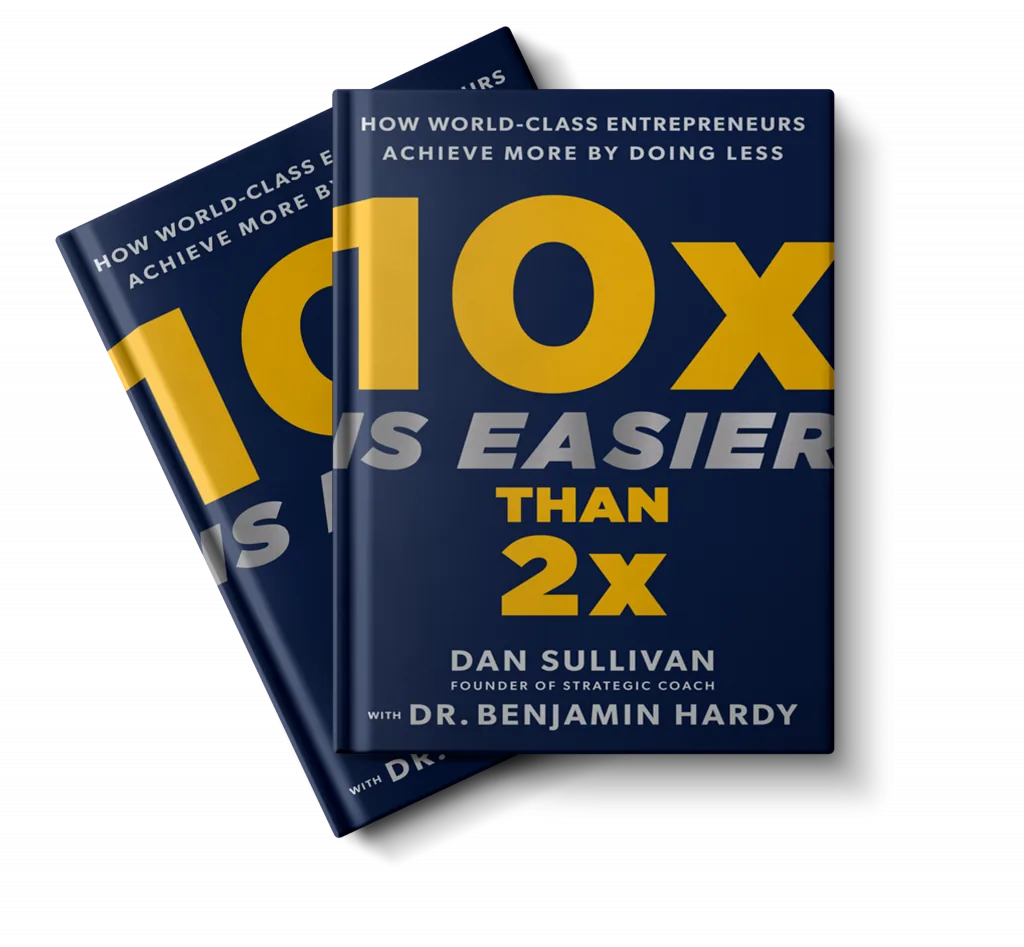
If you are taking a leaf, why settle for twice, go ten-times. 10x Is Easier Than 2x: How World-Class Entrepreneurs Achieve More by Doing Less by Dan Sullivan and Benjamin Hardy writes that pursuing a 10x leap is paradoxically easier than a 2x one, because 2x growth is achieved by doing more of what you already do, while 10x forces you to abandon 80% of your activity and keep only the 20% that produces out-sized results. Each 10x jump demands a new identity, a narrower focus, and a willingness to let go of clients, habits, and standards that got you to where you are.
A
We got the COVID Pandemic of 2020 where everything paused, traffic stopped, and for a few strange months, we could hear birds and see stars. Anthropause: The Beauty of Degrowth by Stan Cox suggest that a managed rollback of production, from monoculture farms to leaf blowers to the military, could meet everyone’s needs while letting nature recover. It is a short read, which you can finish off while waiting for your flight. Unfortunately, this ain’t how the world work and thus is pretty much just a fantasy that is impossible to implement.
C
My daughter wanted to read yet another nightmare book, and so we got The Corn Maiden and Other Nightmares by Joyce Carol Oates. The book gets horror from people, which is worse than the typical ghosts. It goes through a teenage girl, borrowing a corn-maiden sacrifice legend, leads her friends to abduct a younger classmate, and it rotates the telling through the frantic single mother, the wrongly suspected teacher, and the abductor’s own serene logic until suspicion feels scarier than the crime. The six stories that follow are a mixed harvest, with sibling rivalry, and the twin tales blur into one another by the end.
We still define a “business” in the vocabulary of the factory age, but the modern corporation is kinda hollow. Apple outsources its manufacturing, Amazon’s value sits in software and systems rather than warehouses, and “capital” in the old sense of machines and mills is no longer scarce, which means the capitalist no longer holds the power. It is kinda of an academic’s book, more history, where the wisdom is earned rather than quoted. If you run a company, or work inside one and wonder why the official story never matches the building you sit in, you should read The Corporation in the Twenty-First Century Why (Almost) Everything We Are Told About Business Is Wrong by John Kay.
D
Once in a while, one needs to re-read The Design of Everyday Things by Donald Norman. Every time I reread, I find a new way to understand the world around us and hopefully be able to bring more meaning to the things I build.
Don’t Believe Everything You Think by Joseph Nguyen explores how overthinking and negative thought patterns can lead to suffering. Well, a good idea, but not a new one. Reminded of the likes of Sydney Banks’ Three Principles, the idea of a simplified Buddhism for the common men.
H
How the World Really Works: The Science Behind How We Got Here and Where We’re Going by Vaclav Smil is a cold shower for anyone intoxicated by techno-utopian optimism. The book dismantles fashionable narratives about rapid decarbonization, exponential progress, and frictionless transitions by grounding everything in physics, energy flows, materials, and scale. The book is brutally realistic: civilization runs on steel, cement, ammonia, and fossil fuels, and changing that is slow, expensive, and constrained by hard limits. I won’t say “pessimism,” but rather “unfashionable,” which is why it matters. Read it to recalibrate your expectations of the world around you, while, of course, still feeling inspired.
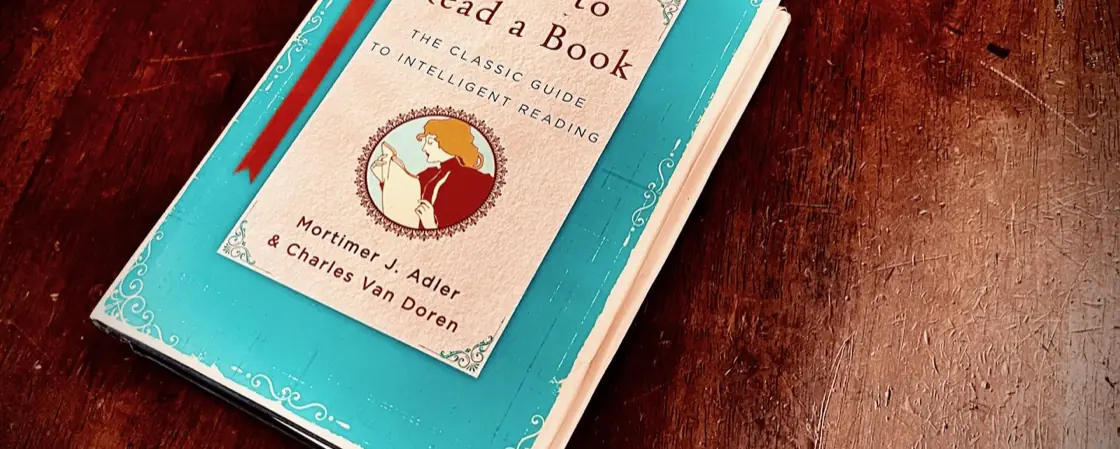
After decades of reading books, I figured it was time to go back in time to learn How to Read a Book. Its first publication dates back to 1940 by Mortimer J. Adler and Charles Van Doren, while the book that you and I will read is the revised one from 1972. This is a pretty serious book, an old-school manual that treats reading as a disciplined skill rather than a casual habit. It contains structured methods, from basic to inspectional, analytical, all the way to syntopical reading on how to extract real understanding from texts. According to the book, reading is an active, effortful process of questioning, interpreting, and judging the content, not passive consumption. Its core argument that serious reading requires work is hard to dispute. Extract the best from the book, upgrade your own process, but it is up to you; have fun.
N
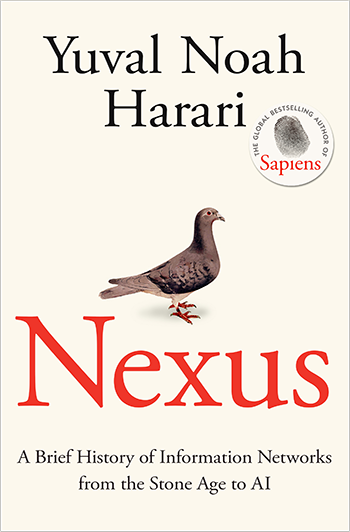
Nexus: A Brief History of Information Networks from the Stone Age to AI by Yuval Noah Harari is a familiar read if you have read his prior works, such as Sapiens: A Brief History of Humankind, Homo Deus: A Brief History of Tomorrow, or 21 Lessons for the 21st Century. You will go through the provocative claim, historical anecdote, philosophical zoom-out, mild warning, and the whole shebang. I found myself doing my quick speed-reading on many pages of the book. My interest, of course, was the section on AI. The book frames AI as the information network that can generate, modify, and act on information without human understanding or consent at scale; something categorically different.
P
Principles for Dealing with the Changing World Order: Why Nations Succeed and Fail by Ray Dalio discusses 500 years of history to bring forth that empires, the Dutch, the British, and now the American, rise and decline in fairly predictable cycles. The first half is quite useful as a historical primer, but the second half gets a little repetitive and Dalio keeps pointing you back to his earlier book, Principles, more than I would have liked. The charts and the ‘Big Cycle’ framework are well presented, though you do sometimes wonder if the pattern is genuinely there or just neatly fitted in hindsight. As with most books in this genre, you can speed-read large parts and still get the gist — read the chapter summaries, watch his 40-minute YouTube video, and then decide if you want to do the full read.
T
Everyone who likes sci-fi seems to have read The Three-Body Problem by Liu Cixin. I’m starting it just now. The book is a lot more science-sy, complete with physics, history, and philosophy. Read slowly, and enjoy the alien and intellectually bracing world the book takes you to.